
How to Stop Letting Your DIY Brand Undersell Your Expertise
Your current situation: You're losing dream clients before you ever get on a discovery call.
They land on your website. Scroll your Instagram. And within seconds, they're making a judgment:
Does this person really understand my problems?
Can they deliver the transformation I'm looking for?
Are they established enough to trust with this investment?
If your brand doesn't immediately answer "yes" to those questions, they're moving on (no matter how good you actually are at what you do).
This is the credibility gap: when your expertise is premium but your brand presence says otherwise.
There's a disconnect between the caliber of your work and what your brand is communicating. Your DIY brand identity… the outdated photos, the inconsistent fonts across platforms, the vague messaging… is underselling you before you ever get a chance to prove your worth.
The good news? Closing this gap doesn't require a complete rebrand or a massive budget. It's about making strategic, intentional shifts that signal professionalism and build trust. Here are 5 Ways to start:

1. Invest in brand photography that looks like the current version of you.
Your photos should reflect where you are NOW (not who you were when you first started). This is often the first thing people notice.
Think about the last time you landed on the Instagram page or website of a hair stylist that was recommended to you by a friend. What did you look at first? Probably their photos. Those images communicated something to you before you read a single word: either "this person is the real deal" or "something feels off here."
Your brand photography is doing the same thing for your potential clients. Outdated photos can immediately undermine your credibility, no matter how polished the rest of your brand feels. If you're still using iPhone selfies from three years ago, images with inconsistent lighting or backgrounds, or photos that don't reflect your current brand aesthetic, you're signaling that you haven't invested in your own business.
And here's the thing: your brand evolves. The way you positioned yourself two years ago isn't the same as how you position yourself today. Maybe you've niched down, raised your rates, or shifted your services entirely. Your visuals need to match that evolution.
Professional brand photography doesn't just make you look good, it builds instant credibility. It tells potential clients that you take your business seriously and that you're established enough to invest in how you show up.
WHAT THIS LOOKS LIKE:
Book a brand photography shoot at least once a year as your brand evolves. Include a variety of shots including headshots, lifestyle images, behind-the-scenes moments, and images that showcase your personality and how you work. Use these photos consistently across your website, social media, email marketing, and any client-facing materials.

2. Create ONE cohesive visual identity: website, social, emails, all of it.
When your fonts, colors, photography, and overall vibe match across every platform, you instantly look more established and trustworthy.
Inconsistency is one of the fastest ways to erode trust. When someone visits your Instagram and sees one set of colors and fonts, then lands on your website and sees something completely different, their brain registers a disconnect. It reads as amateur and messy…even if you're anything but.
Think about the brands you admire. What do they all have in common? Visual consistency. You could spot their content in a lineup because everything from their typography to their color palette to their photography style is intentionally aligned.
You don't need a massive budget to achieve this. You just need clarity and intention. A cohesive visual identity means choosing 2-3 primary brand colors, 1-2 fonts (one for headlines, one for body copy), a consistent photography style, and design elements that feel distinctly "you." Then you apply those across every single touchpoint: your website, social media graphics, email newsletters, lead magnets, client presentations, EVERYTHING.
This kind of consistency doesn't just look professional. It makes you memorable. When someone sees your content in their feed, they should recognize it as yours before they even see your name.
WHAT THIS LOOKS LIKE:
Start with a simple brand board on Canva you can reference for everything (or check out our pre-made brands here). Include your exact color codes, font names, logo variations, and sample layouts. Save it somewhere accessible and commit to using only those elements across all platforms. No more choosing random colors because "this looks nice today."
3. Build a website that sells for you 24/7, not just a digital business card.
Your website should guide visitors toward working with you and taking action, not just exist as a place to browse and "learn more."
Too many service-based business owners treat their website like an online resume. It lists what they do, maybe includes some pretty photos, and ends with a generic "contact me" button. But here's the problem: that approach puts all the heavy lifting on your potential client. They have to figure out if you're the right fit, what the next step is, and whether they should reach out.
A conversion-focused website does that work for them. It anticipates their questions, addresses their hesitations, and guides them clearly toward the next step whether that's booking a call, downloading a resource, or purchasing a service.
Every page on your website should have a purpose. Your homepage should communicate who you help and how within seconds. Your services page should speak directly to your ideal client's struggle and position your offer as the solution. Your about page should build connection and trust, not just list your credentials. And every single page should end with a clear call to action.
When your website is structured strategically, it becomes your hardest-working team member. It's selling for you while you sleep, pre-qualifying leads, and moving people toward working with you without you lifting a finger.
WHAT THIS LOOKS LIKE:
Complete a website audit once per quarter. Go through every page and ask yourself: What's the goal of this page? Is the message clear? What action do I want visitors to take? Every page should have a clear message and call to action or next step. If someone lands on a page and doesn't know what to do next, that's a conversion leak you need to fix.
4. Write copy that speaks to directly your dream client's specific struggle.
Generic messaging gets scrolled past. When someone reads your words and thinks "she's talking to ME" that's when they reach out.
Here's where a lot of DIY brands and websites fall apart: the copy. You can have gorgeous photos and a beautiful website design, but if your words don't connect, none of it matters.
Vague promises and industry jargon create distance. Phrases like "I help entrepreneurs level up" or "providing 360 degree solutions for your business" sound nice, but they don't mean anything. Your ideal client scrolls right past because they don't see themselves in those words.
Specific, relatable language builds instant connection. When you name the exact problem your dream client is experiencing… the Sunday scaries before another chaotic week, the exhaustion of chronic rebranding, the frustration of being the best-kept secret in your industry… they stop scrolling. They think "how does she know exactly what I'm going through?"
This is what strategic copywriting does. It gets inside your ideal client's head, speaks their language, and positions your offer as the bridge between their current struggle and their desired transformation.
The best copy doesn't try to appeal to everyone. It speaks directly to one person, your ideal client, and makes them feel seen, understood, and ready to take action.
WHAT THIS LOOKS LIKE:
Get specific about the problem you solve and who you solve it for. Make it clear enough for anyone to understand without industry jargon. Instead of "I help businesses with their branding," try "I help female business owners stop the chronic rebrand cycle and build strategically-rooted brands that command premium pricing." See the difference? One is forgettable. The other creates instant recognition.5. Set up a welcome sequence so new leads don't go cold
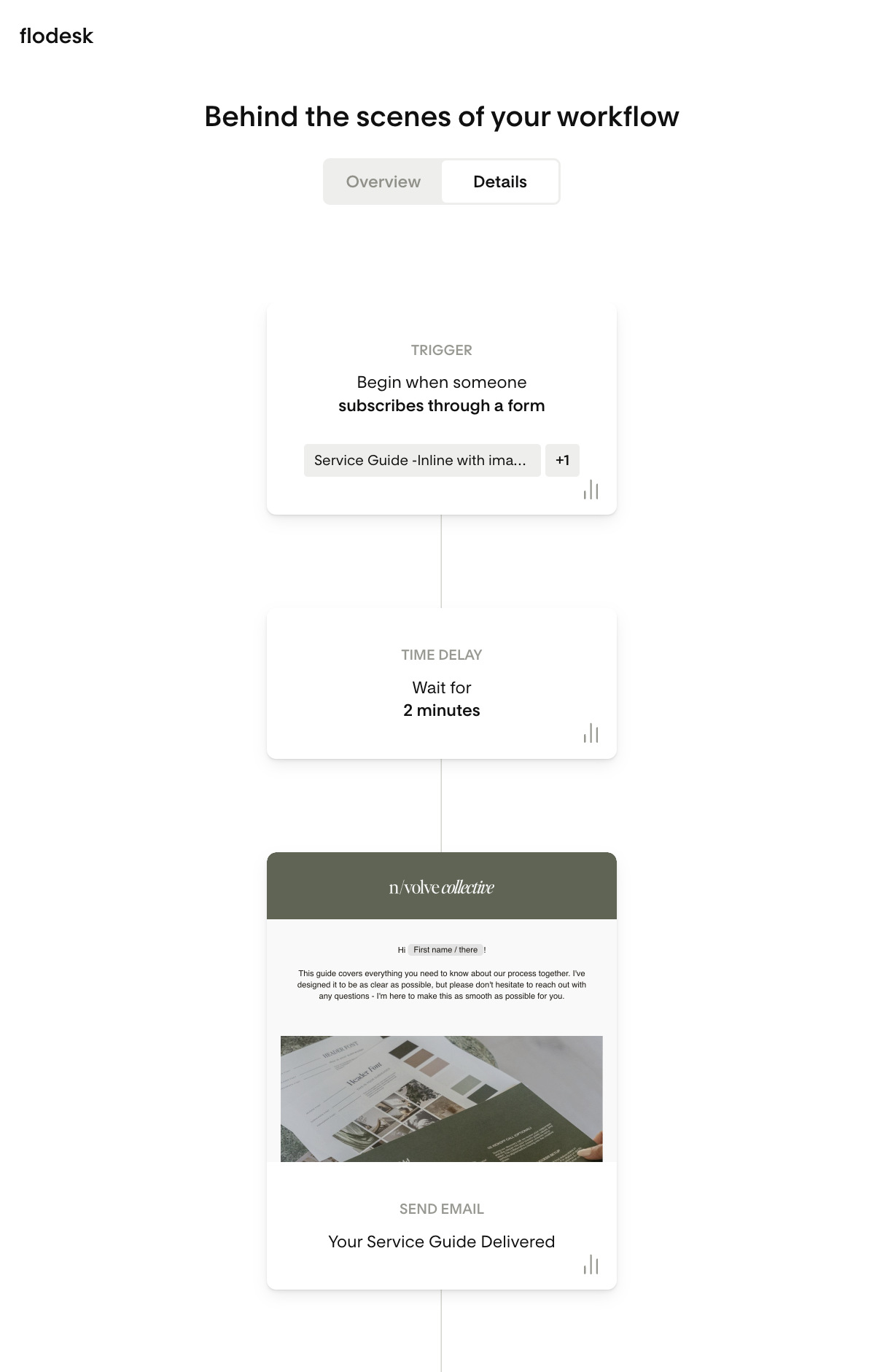
5. Set up a welcome sequence so new leads don't go cold
Your brand experience shouldn’t end at your website. A simple email sequence keeps you top of mind and builds trust before you ever hop on a call.
Most people aren't ready to hire you the first time they find you, especially if you’re services could be considered a larger investment. They need to get to know you, trust you, and understand how you can help them. But if you're not staying in touch, they'll forget about you by the time they're ready to buy.
This is where hesitant leads become ready-to-buy clients. An automated email welcome sequence does the nurturing for you. It introduces new subscribers to your brand story, walks them through your approach, showcases client transformations, and positions your services as the natural next step.
Without this system in place, you're leaving money on the table. Someone downloads your freebie or joins your email list, and then…crickets. They never hear from you again until you randomly send a promotional email months later. But by then, they've forgotten who you are.
A strong welcome sequence keeps you top of mind, builds authority, and moves people toward booking a call or purchasing your services (all while you're focused on other parts of your business). It's one of the highest-leverage activities you can implement.
WHAT THIS LOOKS LIKE:
Develop an automated email sequence with your brand story, services, and a case study. Even just 3-4 emails can make a huge difference.
Email 1: Welcome and set expectations.
Email 2: Share your story and why you do what you do.
Email 3: Break down your process or approach.
Email 4: Include a case study or testimonial and invite them to take the next step.
Simple, strategic, and incredibly effective.
Ready to Close the Credibility Gap?
If this resonates, you're in the right place. Your expertise is premium and your brand should reflect that.
At n/volve collective, we specialize in creating timeless, magnetic brands and conversion-focused websites that transform ambitious businesses into brands sophisticated audiences seek out and remember. From comprehensive brand strategy to custom website design, we'll help you craft every touchpoint to reflect your premium positioning and attract clients who value excellence.
Let's start with a strategic conversation about your vision.
Schedule your complimentary 30-minute discovery call and let's create something extraordinary together.
